The Facts: What Wheatland County Is Facing
Big development proposals come with big claims. Here are the facts — backed by documents, verified by residents, organized so you can see the full picture at a glance.
The Proposal by the Numbers
A foreign developer wants to transform 576 acres of our best agricultural land into an industrial data centre campus. Here’s what that means in plain numbers:
- 576 acres of Tier 2 farmland — Alberta’s second-highest agricultural classification — permanently converted to industrial use
- 3.5 million square feet of hyperscale data centre buildings — that’s more than 60 football fields under roof
- 3 phases of construction stretched over up to 9 years
- 2,555 additional car trips every day on rural roads during construction
- Range Road 264 partially closed — a primary access road for neighbouring properties
- No end user identified — Diode won’t say which company will ultimately run the facility
- Zero independent studies completed on groundwater, noise, or traffic impacts
- No power secured — AESO Phase 1 grid allocation (1,200 MW) is fully taken. Goldfinch needs Phase 2, which has no timeline. Diode’s own website: “hopeful for a preliminary answer”
- ~100 permanent jobs after construction — for a facility larger than 60 football fields on 576 acres of our best farmland
How This Affects Real People
These aren’t abstract numbers. They affect real Wheatland County families and businesses right now.
🐴 Neighbouring Businesses: Infinity Equine
Heidi Pradt runs Infinity Equine, a hunter-jumper horse operation located directly adjacent to the proposed site. Her business depends on quiet, predictable conditions — exactly what a 24/7 industrial data centre with cooling towers, backup generators, and years of construction noise would threaten.
At the July 7 public hearing, Heidi told council: “I do not think the applicant has demonstrated enough technical expertise — on groundwater impact, environmental impact, noise impact, impact to livestock — for this application to proceed.”
Horses are particularly sensitive to noise and disruption. A multi-year construction project next door could put Infinity Equine’s entire operation at risk. Yet no independent noise study has been done.
🏡 Local Residents: Heather Gagne
Heather bought her 30-acre property 2.6 km from the proposed site with 15 years of retirement savings. She moved there for quiet rural living. Now she faces up to 9 years of construction traffic, the partial closure of her primary access road (Range Road 264), and an uncertain future for her property value.
As Heather told council: “I’ve sunk my last 15 years of retirement into this. I’m testing out my retirement next year, and I’m hoping that’s not a wasted amount of money.”
She originally supported light industrial zoning in 2018 — nobody told her it would become a hyperscale data centre.
🌾 Farmers and Farmland
Tier 2 farmland is some of Alberta’s best agricultural soil. Once it’s scraped away and paved over for industrial use, it can never be farmed again. If this project sets a precedent — converting prime farmland to data centres — every tech company with cheap power needs will look at Alberta’s agricultural land next.
This Is What Diode Builds
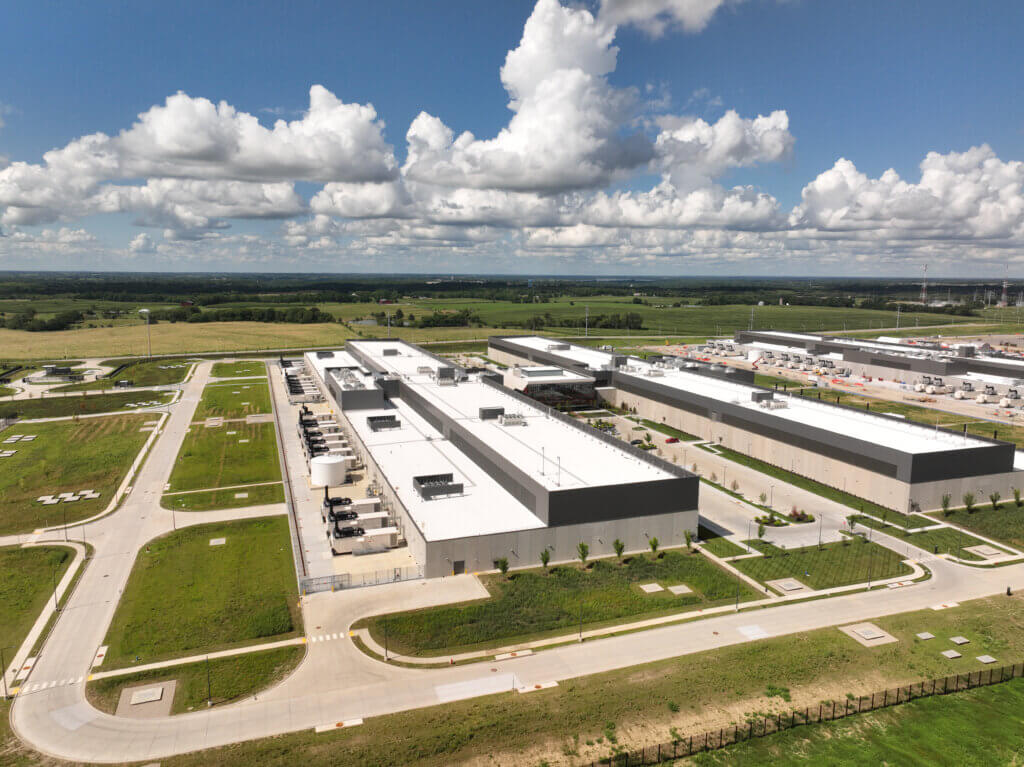
Below is an aerial photo of a Meta data centre built by Diode Ventures at Golden Plains Technology Park in Kansas City — 882 acres of what was once agricultural land, now a hyperscale computing facility. This is the same developer proposing Goldfinch Technology Park in Wheatland County. This is what 576 acres of Tier 2 farmland would become.
The Developer’s Track Record
Diode Ventures (a subsidiary of US engineering giant Black & Veatch) has been defeated by community opposition in both of its previous major public proposals:
- Peculiar, Missouri (2024): A 504-acre, $1.5 billion proposal. After residents packed meetings, formed Facebook groups, and raised the same concerns we’re raising today — no end user, no studies, no transparency — the city council removed data centres from the zoning ordinance. Developer defeated.
- Charles City, Virginia (2025): A 515-acre proposal. Despite having planning commission support, Diode withdrew after overwhelming community opposition. Residents formed “Charles City Citizens First” and refused to back down. Even the Washington Post and New York Times covered it. Developer withdrew.
The pattern is clear: Diode proposes without an end user, submits incomplete studies, and counts on communities being too disorganized to fight back. But organized communities win. That’s what we’re building here.
What’s Still Unknown
Here are the questions residents and council still don’t have answers to:
- Who will operate this facility? Diode won’t name the end user. Residents are being asked to approve a zoning change without knowing which company will run the site.
- What will happen to groundwater? No independent hydrogeological study has been completed. The developer’s own documents reference wells as a potential water source.
- How loud will it be? No independent noise study has been done. Promises of sound walls and berms are deferred to a future “development permit stage” — after the zoning is already approved.
- What will traffic look like? The traffic impact study hasn’t addressed specific routes. Residents like Heather are left guessing whether they’ll still be able to access their own properties.
- What about the bigger picture? This isn’t an isolated project. Meta ($13B, Sturgeon County), Wild Rose Power Hub ($10B, Langdon), and Beacon ($4B, Chestermere) are all in various stages of proposal. This is the leading edge of a province-wide transformation.
What Residents Are Asking For
- Independent studies first. Groundwater, noise, traffic, and agricultural impact assessments — done by qualified experts, paid for by the developer, reviewed by the community — before any approvals are granted.
- Name the end user. Council and residents deserve to know who will operate this facility before making a decision that affects the community for generations.
- Proper process. Major land-use changes deserve real scrutiny. Council needs complete information, and residents need their voices heard.

📚 Dig Deeper by Topic
We publish detailed blog posts on every key issue — with source documents, expert analysis, and ongoing updates. Browse by topic:
⚡ Energy & Grid
- 🔌 Energy & Grid — power sourcing, AESO capacity, the UCP’s data centre rush
🌾 Land & Water
- 💧 Farmland & Water — Tier 2 soil, groundwater, 550K gallons a day
- 🌡️ Climate & Environment — heat islands, environmental assessments
🚜 Community & Economy
- 🚛 Traffic, Noise & Infrastructure — 2,555 trips/day, rural roads, noise studies
- 💰 Economic Impact — job ratios, property values, who benefits
- 📋 How to Help — practical actions for supporters
🏛️ Council & Process
- 🗳️ Council Process & Timeline — zoning, bylaws, public hearings explained
- 📂 Developer Track Record — Peculiar, Charles City, Diode’s playbook
- 🌍 Precedent & Comparisons — what other communities did
📜 Rights & Oversight
- 🤝 Treaty Rights & Indigenous Consultation — Treaty 7, duty to consult
- 📄 Evidence & Research — source documents and analysis
- 📺 Media & Press — news coverage and video
📰 Browse all posts — see everything in chronological order
📋 Our Source Standards
- Primary documents first — county notices, application materials, legislation
- Reputable news coverage with dates and links to originals
- Clear separation between confirmed facts and open questions
Have a source we should review? Let us know.
Ready to Take Action?
Council is deliberating right now. Every voice matters. Here’s what you can do today.